People Also Search For: The Guide for Marketers and SEOs
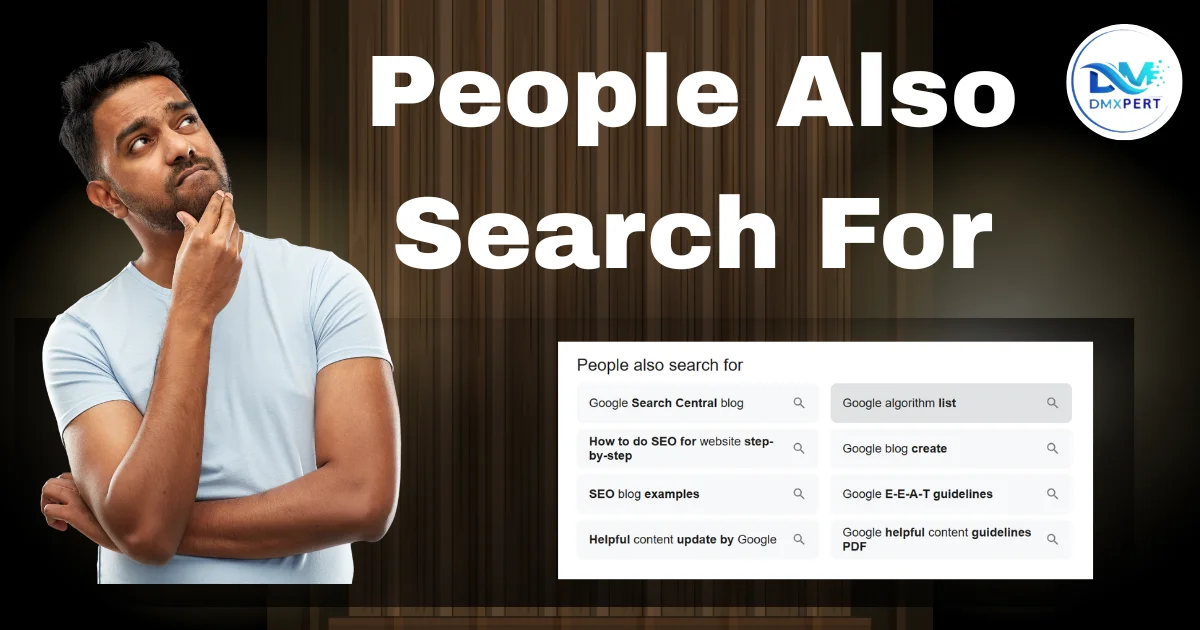
If you spend any time using Google – whether for research, shopping, or SEO work – you’ve likely seen this section: people also search for. It appears as a dynamic panel of suggestions, often tucked beneath a search result or at the bottom of the search engine results page (SERP). At first glance it may look like just another SERP feature, but to marketers and SEOs, it’s a goldmine of actionable insights.
History of People Also Search For
Google’s mission has always been to organize information and make it universally accessible. As user search behavior became more complex, Google noticed that users rarely stop after one search. They search, click, return, refine, and search again. This pattern gave birth to advanced SERP features.
Initially, Google introduced related searches at the bottom of result pages. Later, with deeper behavioral tracking and machine learning, Google launched People Also Search For (PASF) to reflect real user search journeys. This feature evolved as a way to help users find better answers when their first click did not fully satisfy their intent.
Today, people also search for an essential SERP feature that reflects how users think, explore, and make decisions online.
What Is “People Also Search For”?
People Also Search For is a Google SERP feature that displays a list of search queries users commonly perform after searching for a particular term. These suggestions usually appear when a user clicks on a result and then returns to the search results page.
Unlike static keyword suggestions, people also search results are behavior-driven. They are generated from real searches made by users who followed similar paths. This makes PASF highly valuable for marketers and SEOs looking to understand user intent beyond a single keyword.
In simple words, PASF tells you:
- What users searched for next
- How they refined their queries
- What information they felt was missing
How Do People Also Search For Work in Google Search?
Google’s PASF system works by analyzing billions of searches and identifying recurring behavioral patterns. When users search for a keyword, click a result, return to the SERP, and search again, Google connects these actions.
Over time, Google collects this data and shows people also search for suggestions that match those patterns. These suggestions help users refine searches quickly while helping Google deliver more relevant results.
For SEOs, this means PASF reflects real-world search behavior, not assumptions.
This Algorithm Considers Several Factors
Google does not rely on a single signal to generate PASF suggestions. Instead, it uses a combination of contextual, behavioral, and technical factors to determine which queries appear.
- The Primary Inquiry: The main keyword searched plays a crucial role. Google identifies closely related topics that users frequently explore after searching for the primary query.
- The Location of the Searcher: Search behavior varies by region. Local intent heavily influences people also search for suggestions, especially for services and businesses.
- The Device Used by the Searcher: Mobile and desktop users behave differently. Google adapts PASF suggestions based on the device used.
- The Search History of the Searcher: Previous searches help Google personalize PASF results and refine suggestions.
- The Web Browsing History of the Searcher: Browsing activity outside Google also contributes to understanding user interests.
- The Content of the SERP: If top-ranking pages focus on specific subtopics, PASF suggestions align accordingly.
- People Also Search For Is Constantly Updated: PASF is dynamic and changes with trends, seasons, and user behavior shifts.
Why Are People Also Search For Is Important for SEO?
For modern SEO, ranking for one keyword is no longer enough. Search engines now prioritize content that satisfies multiple layers of user intent. People also search for plays a major role in this shift.
By analyzing PASF queries, SEOs can:
- Understand deeper intent
- Expand keyword targeting
- Improve content relevance
- Reduce bounce rates
Ignoring PASF means ignoring how users actually search.
Here Are Some Reasons Behind PASF’s Importance in SEO
People Also Search For (PASF) plays a crucial role in modern SEO because it reflects real user behavior and search intent. By analyzing PASF queries, marketers and SEOs can understand what users look for after their initial search, uncover new keyword opportunities, and identify content gaps. These insights help create more relevant, user-focused content, improve rankings for related searches, and enhance overall search visibility by aligning pages with how people actually search on Google.
- Helps to Evaluate User Intention: PASF reveals what users want beyond their first query, helping marketers align content with intent.
- Helps You Discover New Keywords to Target: Many PASF queries are long-tail keywords with strong intent and lower competition.
- Helps You Compare Your Results with Competitors: If competitors rank for PASF queries you don’t target, you are missing opportunities.
- Helps You Understand Consumer Search Behavior: PASF shows how customers research products, services, and solutions step by step.
Stats About PASFs Appearing on SERPs
Research shows that PASF:
- Appears more often for informational searches
- Is more common on mobile SERPs
- Frequently overlaps with related searches, but provides deeper intent signals
This proves PASF’s growing influence in SEO.
How to Optimize Your Content to Rank Among People Also Search For Box
Ranking within PASF suggestions requires more than keyword placement. It demands content depth, intent matching, and structure. Follow these steps to optimize your content:
- Create an Outstanding Content Outline: Plan content that covers the topic holistically, including subtopics users commonly explore.
- Know and Use Search Intent: Understand whether PASF queries are informational, transactional, or navigational.
- Identify and Implement Key Search Terms in Content: Use people also search for and related searches naturally in headings and body content.
- Add FAQ and Schema Markup: Schema improves visibility and increases chances of appearing in SERP features.
People Also Search For on Mobile SERPs
Mobile searches now dominate the digital landscape, with a majority of users relying on smartphones to find information, products, and services. Because mobile screens offer limited space, Google focuses heavily on features that help users refine their queries quickly and efficiently. This is where people also search for plays a vital role on mobile SERPs.
When users do not find the exact answer from their first result, PASF suggestions appear as quick alternatives, guiding them toward more relevant searches without forcing them to type again. Mobile users also tend to have shorter attention spans and more immediate intent, making people also search suggestions essential for improving user experience. For marketers and SEOs, optimizing content for mobile PASF queries is no longer optional—it is critical for maintaining visibility and engagement in mobile-first indexing.
New PASF Milestones for Google to Understand Information Better
With advancements in artificial intelligence and semantic search, Google has significantly enhanced how people also search for works. PASF is no longer just a list of related keywords; it now reflects a deeper understanding of context and intent.
Modern PASF supports topic clustering by connecting related concepts under a broader theme, allowing Google to understand content relationships more clearly. It also improves contextual relevance by matching suggestions to the user’s specific intent rather than just the keyword used. Additionally, PASF helps map the user journey by identifying how people move from general queries to more specific searches. These milestones enable Google to connect information more intelligently and deliver results that align closely with what users truly want.
How to Use People Also Search For to Reveal Your Top Label Competitors
Analyzing people also search for queries is an effective way to identify your true search competitors—not just the brands you assume are competing with you. When you examine PASF suggestions related to your primary keywords, you often discover competitors ranking for closely connected topics that attract the same audience.
These insights help marketers understand which brands dominate related searches, what type of content performs well, and where gaps exist in their own strategy. By targeting PASF queries that competitors rank for, you can create more comprehensive, intent-focused content and position your brand as a stronger authority in your niche.
What You Need to Know About People Also Search For
People Also Search For is fundamentally behavior-driven, meaning it is shaped by how real users interact with search results. Unlike static keyword lists, PASF changes frequently as search trends, user intent, and browsing behavior evolve.
It complements related searches by offering deeper insights into what users explore next rather than just what is loosely connected to a topic. Most importantly, PASF reflects real user journeys, showing how people refine their searches step by step. Understanding these patterns allows marketers to build content strategies that align more closely with natural search behavior and user expectations.
Changes in the PAA SERP Positions
People Also Ask (PAA) boxes have undergone noticeable changes in recent years. Instead of appearing only near the top of search results, PAA sections can now appear at multiple positions throughout the SERP. This shift allows Google to introduce follow-up questions at different stages of the user’s search journey.
PAA often works alongside people also search for, guiding users deeper into a topic by answering related questions and suggesting refined queries. For SEOs, this highlights the importance of structured, question-based content that can serve both PAA and PASF opportunities.
How to Optimize for PASF Featured Snippets
Optimizing for PASF-related featured snippets requires a clear focus on intent and structure. Content should provide direct, concise answers to common questions while maintaining logical flow. Well-organized headings, short explanatory paragraphs, and clear definitions help Google extract relevant information easily.
Using people also search for queries naturally within content sections improves relevance, while schema markup and FAQ sections further enhance the chances of appearing in featured snippets. The goal is to deliver precise, user-focused answers that satisfy search intent quickly.
Best Ways to Use People Also Search For in SEO & PPC
People Also Search For can be applied strategically across both organic and paid search efforts. In SEO, PASF helps uncover long-tail keywords that reflect strong intent and are often easier to rank for. These keywords can be integrated into blog posts, landing pages, and content clusters.
For content ideation, PASF queries reveal what users want to learn next, making them excellent topics for blogs, guides, and FAQs. Using PASF as FAQs within pages improves relevance and user experience. PASF insights also strengthen on-page SEO by guiding the use of headings, internal links, and metadata. For long-form content, PASF enables the creation of comprehensive pillar pages that cover a topic from multiple angles.
In PPC, PASF can inspire new ad groups, keyword targeting, and audience intent mapping.
What Are the Differences Between People Also Search For and Related Searches?
While both features aim to help users discover additional information, people also search for and related searches differ in purpose and depth. PASF is behavior-based and dynamic, generated from real user interactions and updated frequently. Related searches, on the other hand, are keyword-based and more static, offering broader topic associations.
Both are valuable for SEO, but PASF provides deeper intent insights, making it especially useful for content optimization and user-focused strategies.
How to Manage Duplicate PASF Topics
Targeting multiple PASF queries without a strategy can lead to duplicate content issues, which can harm SEO performance. To avoid this, marketers should consolidate similar PASF keywords into a single authoritative landing page whenever possible.
Using canonical tags helps signal the preferred version of similar content to search engines. Redirecting weaker or overlapping pages to stronger, more comprehensive pages further strengthens topical authority and prevents keyword cannibalization.
Best Tools That Will Help You Find PASF Keywords
Several SEO tools make it easier to discover and analyze people also search for keywords at scale. Free and freemium tools such as Keywords Everywhere and Google SERPs provide quick insights directly from search results. Advanced platforms like Ahrefs, SEMrush, and Ubersuggest offer deeper keyword analysis and competitive data.
Tools like Answer The Public, Frase, Also Asked, and Dashboard PASF Finder help visualize search intent, question-based queries, and content gaps. Using a combination of these tools allows marketers to build a strong PASF-driven keyword and content strategy.
How DMXpert Uses People Also Search For Insights to Strengthen SEO Services?
DMXpert is a digital marketing agency that leverages search behavior insights such as People Also Search For to deliver smarter, intent-focused SEO services. By analyzing PASF and related searches, DMXpert helps businesses understand how users refine their queries and what they search for next. This approach allows our SEO services to create more relevant content, target high-intent keywords, and build stronger topical authority, ensuring brands align with real user journeys and achieve sustainable organic growth.
Frequently Asked Questions
1. What does “people also search for” mean in Google?
People Also Search For (PASF) is a Google search feature that shows related queries users commonly search after performing an initial search. It helps users refine their queries and find more relevant information based on real search behavior.
2. How is people also search for different from related searches?
People also search for is behavior-based and dynamic, showing what users actually searched for next, while related searches are keyword-based and appear at the bottom of SERPs as broader topic suggestions.
3. Why is people also search for important for SEO?
PASF is important for SEO because it reveals real user intent, helps discover long-tail keywords, identifies content gaps, and improves content relevance, which can lead to better rankings and higher engagement.
4. How can marketers use people also search for to improve content?
Marketers can use PASF to find new content ideas, expand existing topics, create FAQ sections, improve on-page SEO, and build long-form content that aligns with how people actually search.
5. Does people also search for appear on mobile search results?
Yes, People Also Search For appears frequently on mobile SERPs and plays a key role in helping users quickly refine searches due to limited screen space and mobile-first indexing.