How to build a social media marketing strategy showing smartphone with social media icons and digital marketing elements by DMXpert

How to Build Your Social Media Marketing Strategy for Long-Term Business Growth

How to Build Your Social Media Marketing Strategy for Long-Term Business Growth

How to build a social media marketing strategy showing smartphone with social media icons and digital marketing elements by DMXpert

Every scroll, every click, and every interaction on social media is an opportunity—but only for brands that know how to use it strategically. In today’s digital-first world, social platforms are no longer optional marketing channels; they are powerful ecosystems where buying decisions are influenced, trust is built, and brands are remembered. This is why having a clear social media marketing strategy is no longer a luxury—it is a necessity.

Many businesses believe social media marketing is simply about posting consistently. In reality, successful social media marketing is driven by research, planning, creativity, analytics, and continuous optimization. Without strategy, social media efforts become scattered and ineffective. With the right strategy, however, social media becomes one of the most cost-effective tools in digital marketing.

This guide explains what is social media marketing, why it matters, and how you can build a structured, SEO-friendly social media strategy that supports real business outcomes.

What Is Social Media Marketing?

To understand strategy, we must first understand what is social media marketing. Social media marketing is the process of using social platforms such as Facebook, Instagram, LinkedIn, X (Twitter), and YouTube to promote products or services, engage with audiences, and achieve specific business goals.

Within social media marketing in digital marketing, social platforms play multiple roles. They help brands increase visibility, generate demand, drive website traffic, nurture leads, and support customer relationships. Unlike traditional advertising, social media allows two-way communication, making it one of the most influential marketing channels today.

A well-executed social media marketing strategy ensures that every activity—whether organic or paid—contributes to measurable results.

Why a Social Media Strategy Is Essential

A common mistake businesses make is jumping into social media without a plan. Posting randomly, copying competitors, or chasing trends without alignment leads to wasted time and poor results. This is where a structured social media strategy becomes critical.

A strategy gives direction to your marketing strategy as a whole. It clarifies why you are on social media, who you are targeting, and what success looks like. More importantly, it defines what does SMM strategy focus on—audience intent, content relevance, engagement quality, and performance measurement.

When strategy is clear, social media efforts become consistent, scalable, and aligned with business growth.

Defining Social Media Marketing Objectives and Goals

Every effective social media marketing strategy starts with well-defined objectives. These objectives guide content creation, platform selection, and campaign planning.

Your social media marketing objectives might include increasing brand awareness, improving engagement, driving traffic to your website, generating leads, or boosting sales. These objectives then translate into measurable social media marketing goals, such as reaching a specific audience size, achieving a certain engagement rate, or generating a defined number of leads per month.

Clear goals ensure that social media activity is purposeful rather than experimental.

Understanding Your Target Audience in Depth

One of the most important aspects of how to do social media marketing successfully is audience understanding. Social media platforms are crowded spaces, and generic content rarely stands out.

A strong social marketing strategy is built on knowing who your audience is, what challenges they face, and how your brand can provide value. Audience research helps identify preferred platforms, content formats, language tone, and posting times.

When your content speaks directly to audience needs, engagement increases naturally, supporting long-term social media marketing goals.

Choosing the Right Platforms for Your Social Media Strategy

Not all platforms deliver the same results for every business. Choosing the right channels is a strategic decision that directly impacts performance.

For example, Instagram and Facebook are highly effective for visual storytelling, community building, and social media advertising. LinkedIn supports B2B branding, professional authority, and lead generation. YouTube enables long-form content and education-based marketing.

A focused social media marketing strategy prioritizes platforms where your audience is active instead of trying to be present everywhere.

Mastering SMM Basics Before Scaling

Before expanding campaigns or investing heavily in ads, businesses must understand SMM basics. These fundamentals include consistency, authenticity, engagement, and data-driven decision-making.

Social platforms reward meaningful interactions more than volume. This means that quality content, timely responses, and audience-centric messaging perform better than frequent but irrelevant posts.

Mastering these basics builds a strong foundation for advanced social media promotion and advertising strategies.

Content as the Core of Social Media Marketing

Content is the backbone of every social media marketing strategy. It is how brands communicate value, personality, and expertise.

Effective content is not overly promotional. Instead, it educates, inspires, and engages. When content aligns with social media marketing objectives, it becomes easier to guide audiences from awareness to conversion.

A balanced content approach supports brand trust while strengthening social media marketing in digital marketing efforts.

Planning and Consistency for Sustainable Growth

Consistency is one of the most underestimated yet powerful success factors in social media marketing. When brands follow a planned approach, their messaging stays aligned with ongoing campaigns, business updates, and seasonal trends, creating a clear and unified brand voice. Planning content in advance helps maintain content quality, reduces last-minute stress, and ensures every post supports the overall social media strategy. Over time, consistent posting builds audience trust, improves platform visibility, increases engagement rates, and strengthens brand recall, making it easier for audiences to recognize and remember the brand.

Engagement and Community Building

Social media thrives on interaction. Engagement transforms passive viewers into active participants and loyal followers. Responding to comments, replying to messages, and acknowledging feedback strengthens relationships. Engagement supports social media marketing objectives by increasing reach and building trust—two essential elements of long-term growth. A brand that listens and responds is perceived as authentic and reliable.

Using Social Media Advertising for Faster Results

Organic growth is valuable, but it takes time. Social media advertising allows businesses to accelerate results by targeting specific demographics, interests, and behaviors.

Paid ads are particularly effective for lead generation, product launches, and remarketing. When combined with organic efforts, advertising enhances the overall social media marketing strategy rather than replacing it. Strategic ad usage ensures better ROI and supports scalable growth.

Measuring Performance and Optimizing Strategy

No social marketing strategy is complete without measurement. Tracking metrics such as reach, engagement, clicks, conversions, and cost per result provides insights into what is working and what needs improvement.

Data-driven optimization allows brands to refine content, adjust targeting, and improve messaging. Continuous analysis ensures that the social media marketing strategy evolves with audience behavior and platform changes.

A Practical Social Media Strategy Example

Consider a service-based business whose primary goal is lead generation through social platforms. A strong social media strategy example for such a business includes sharing educational content that answers common customer questions and positions the brand as an industry authority. Alongside this, customer testimonials and success stories help build credibility and trust among potential clients. To accelerate results, targeted social media advertising is used to reach high-intent audiences and capture qualified leads. This integrated approach demonstrates how organic content and paid advertising work together to increase visibility, build trust, and achieve clearly defined marketing goals effectively.

Common Mistakes That Weaken Social Media Marketing

Many brands struggle with social media because they focus more on increasing follower counts than delivering real value to their audience. Others post consistently but ignore analytics, making it difficult to understand what content actually works. Posting without a clear social media marketing strategy often leads to inconsistent messaging and poor engagement. Even well-intentioned efforts can fail when decisions are based on assumptions rather than data. By avoiding these common pitfalls and focusing on value-driven content, audience insights, and performance analysis, businesses can strengthen their social media marketing strategy and achieve sustainable, long-term growth and results.

How to Start Social Media Marketing the Right Way

For beginners, learning how to start social media marketing the right way begins with clarity and planning, not posting randomly or copying competitors. The first step is to clearly define your goals. Ask yourself what you want to achieve through social media—brand awareness, website traffic, lead generation, or sales. Clear goals give direction to every action you take and help measure success accurately.

Next, invest time in understanding your target audience. Know who they are, what problems they face, which platforms they use, and what type of content they engage with the most. This insight ensures your messaging is relevant and valuable rather than generic.

Choosing the right platforms is equally important. Instead of trying to be present everywhere, focus on platforms where your audience is most active and where your business can perform best. Finally, prioritize value-driven content that educates, informs, or solves problems. When combined, this structured approach removes confusion, improves consistency, and creates a clear roadmap for sustainable social media growth.

The Role of Social Media Marketing in Digital Marketing

Social media marketing in digital marketing plays a vital role in supporting SEO, paid advertising, content marketing, and email campaigns by consistently driving traffic, engagement, and brand visibility. Social signals help amplify content reach, increase website visits, and strengthen brand presence across multiple channels. When social media efforts are aligned with SEO strategies and paid campaigns, they create a seamless user journey from discovery to conversion. This integrated approach allows brands to nurture audiences at different stages of the funnel, effectively bridging the gap between brand awareness and meaningful customer action.

Conclusion

A successful social media marketing strategy is built on insight, consistency, and continuous optimization. It is not about posting more content; it is about posting with a clear purpose that aligns with business goals. By understanding what does SMM strategy focus on, setting well-defined social media marketing objectives, and effectively integrating social media promotion and advertising, businesses can turn social platforms into long-term growth engines. At DMXpert, we believe that in a digital world full of noise, a well-planned strategy is what makes a brand stand out, build trust, and stay remembered.


Illustration explaining what social media marketing is, how SMM works, and the pros and cons of social media marketing using mobile, megaphone, and engagement icons

What Is Social Media Marketing? How SMM Works, Pros and Cons

What Is Social Media Marketing? How SMM Works, Pros and Cons

Illustration explaining what social media marketing is, how SMM works, and the pros and cons of social media marketing using mobile, megaphone, and engagement icons

Every time someone discovers a brand through an Instagram reel, forms an opinion from a LinkedIn post, or decides to buy after watching a YouTube review, social media is quietly influencing that decision. What once started as a way to connect with friends has evolved into one of the most powerful forces in modern business. Today, social media shapes how people discover brands, evaluate products, and interact with companies—often without realizing they are part of a larger marketing system driven by Social Media Marketing (SMM).

In today’s digital economy, understanding what is social media marketing is essential for businesses that want to stay visible, relevant, and competitive. This article explains the social media marketing meaning, explores how SMM marketing works, discusses its growing importance, and examines the pros and cons of social media marketing, helping you clearly understand why SMM plays such a critical role in digital growth.

What Is Social Media Marketing (SMM)?

Social media marketing meaning refers to the use of social media platforms to promote a company, product, or service by creating and sharing content that engages users and encourages them to take action. These actions may include following a brand, visiting a website, signing up for a service, or making a purchase.

In simple terms, when people ask what is social media marketing, they are asking how businesses use platforms like Facebook, Instagram, LinkedIn, X (Twitter), and YouTube to connect with audiences and achieve marketing goals. This process is commonly known as SMM marketing.

SMM Full Form

The SMM full form is Social Media Marketing.
When marketers refer to what is SMM, they are talking about this broader practice of using social networks as a structured marketing channel, not just posting content casually.

As a part of social media digital marketing, SMM plays a critical role in brand awareness, customer engagement, and conversion optimization.

Understanding the SMM Concept

The social media marketing concept is fundamentally different from traditional marketing. Instead of pushing messages to a passive audience, social media allows brands to participate in conversations. Users can comment, share opinions, ask questions, and even influence how a brand is perceived publicly.

This two-way interaction is what makes social media marketing so powerful. Brands that focus only on promotion often struggle, while those that focus on value, storytelling, and engagement tend to build stronger relationships and long-term loyalty.

At its core, social media digital marketing blends content creation, psychology, data analysis, and community building into a single, dynamic strategy.

Why Social Media Marketing Is Important?

The importance of social media marketing has increased dramatically because consumer behavior has shifted toward digital platforms. People now research products online, compare brands through reviews, and follow companies on social media before making purchasing decisions.

Social media marketing allows businesses to stay visible where their audience already spends time. It also helps brands humanize themselves by showing personality, responding to feedback, and engaging in real conversations. For small and medium businesses, SMM marketing can level the playing field by offering cost-effective reach and precise targeting.

Because of these factors, social media marketing is no longer optional—it is a core component of modern business strategy.

How Social Media Marketing (SMM) Works?

To fully understand what is social media marketing, it is important to examine how SMM marketing works in practice. The process is strategic and data-driven rather than random or experimental.

It begins with goal setting. Businesses must clearly define what they want to achieve, such as increasing brand awareness, driving website traffic, generating leads, or boosting sales. These goals guide every decision that follows.

Next comes audience research. Understanding demographics, interests, online behavior, and platform preferences helps marketers tailor content effectively. This is a crucial step in social media digital marketing, as the same content rarely performs equally well across all platforms.

Content creation follows strategy and research. Content can include educational posts, videos, reels, stories, infographics, testimonials, and promotional creatives. High-performing content is relevant, valuable, and aligned with audience intent.

Engagement is the next layer. Responding to comments, answering messages, and participating in discussions are essential parts of SMM marketing. This interaction builds trust and signals authenticity.

Paid advertising is often integrated to accelerate results. Social platforms offer advanced targeting options, allowing businesses to reach specific users based on age, location, interests, and behavior.

Finally, performance is tracked using analytics tools. Metrics such as reach, engagement, click-through rate, and conversions help marketers optimize future campaigns.

Major Social Media Platforms Used in SMM

Social media marketing strategies vary depending on the platform being used. Each platform has a unique audience and content style.

Facebook is commonly used for community building, ads, and customer communication. Instagram focuses heavily on visuals, reels, and influencer collaborations. LinkedIn is ideal for B2B marketing and professional branding. X (Twitter) supports real-time conversations and brand voice. YouTube plays a key role in video-based social media digital marketing, especially for education and product reviews.

Choosing the right platform is a strategic decision within SMM marketing, not a one-size-fits-all approach.

Building an Effective SMM Strategy

A strong social media marketing strategy aligns business goals with audience needs. It starts with defining clear objectives and identifying key performance indicators.

Content planning is essential. Brands must decide what type of content to publish, how often to post, and which formats to use. Consistency helps maintain visibility and trust.

Another important element is brand voice. A consistent tone across platforms strengthens recognition and credibility. This is especially important in long-term SMM marketing efforts.

Strategy also includes crisis management, community guidelines, and ongoing optimization based on performance data.

Measuring Social Media Marketing Performance

Measurement is a defining feature of social media digital marketing. Unlike traditional marketing, SMM allows real-time tracking of results.

Key metrics include reach, impressions, engagement, follower growth, website traffic, and conversions. These metrics help businesses understand what is working and what needs improvement.

Tracking performance ensures that SMM marketing remains efficient, accountable, and aligned with business objectives.

Advantages of Social Media Marketing

When discussing social media marketing advantages and disadvantages, the benefits are often the main reason businesses invest in SMM.

One major advantage is cost efficiency. Compared to traditional advertising, social media marketing requires lower budgets and offers better targeting. Another benefit is direct customer engagement, which helps build trust and loyalty.

Social media also improves brand visibility and supports content distribution. Analytics tools provide valuable insights, enabling continuous optimization.

These benefits highlight the importance of social media marketing in modern digital strategies.

Disadvantages of Social Media Marketing

Despite its strengths, social media marketing also has limitations. Managing multiple platforms requires time, creativity, and consistent effort. Algorithm changes can reduce organic reach, making it harder to achieve results without paid support.

Reputation management is another challenge. Negative feedback is public and must be handled professionally. Additionally, measurable ROI from organic SMM marketing may take time, especially for new brands.

Understanding these challenges is essential when evaluating the pros and cons of social media marketing.

Social Media Marketing Advantages and Disadvantages: A Balanced View

The social media marketing advantages and disadvantages show that SMM is neither effortless nor guaranteed. Its strengths lie in engagement, targeting, and measurability, while its challenges involve time investment, algorithm dependency, and content saturation.

Businesses that approach SMM marketing strategically are more likely to succeed than those that treat it as an afterthought.

Social Media Marketing vs Traditional Marketing

Compared to traditional marketing, social media digital marketing offers better targeting, real-time analytics, and two-way communication. Traditional methods still have value, but they lack the flexibility and interaction that social media provides.

This comparison explains why social media marketing has become central to digital growth strategies.

The Future of Social Media Marketing

The future of social media marketing is shaped by evolving technology and user behavior. Short-form video, AI-driven personalization, influencer marketing, and social commerce are redefining how brands connect with audiences.

Businesses that adapt to these trends and prioritize authenticity will continue to benefit from SMM marketing in the long term.

Conclusion

So, what is social media marketing?
It is a structured, data-driven approach to digital communication that helps businesses build awareness, trust, and meaningful conversions through social platforms. Understanding what is SMM, the SMM full form, and the broader social media marketing concept enables brands to use this channel strategically rather than randomly.

While there are clear pros and cons of social media marketing, its importance in modern business is undeniable. When executed with the right strategy, consistency, and creativity, social media digital marketing becomes one of the most powerful tools for sustainable growth. At DMXpert, we help businesses transform social media into a measurable growth engine by aligning data, content, and audience insights—proving that when handled by the right digital marketing agency, SMM delivers long-term value beyond likes and followers.


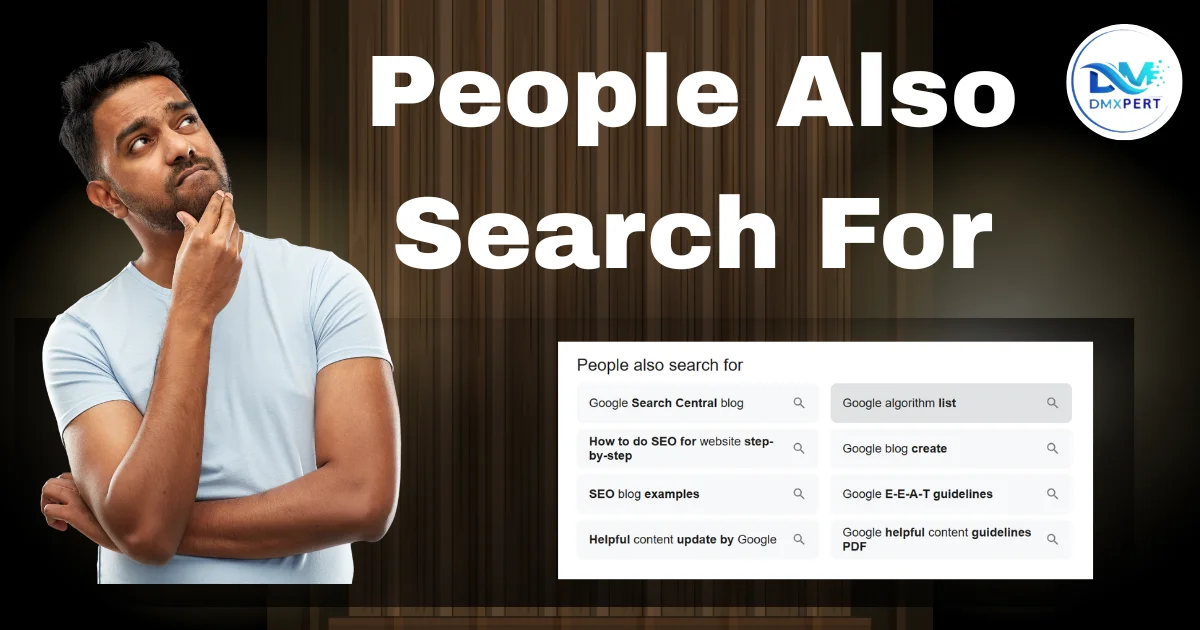
A professional team discussing the technical framework of the People Also Search For interface for strategic SEO and online visibility.

Algorithmic Synthesis of the “People Also Search For” Interface

People Also Search For Algorithmic SEO Framework

A professional team discussing the technical framework of the People Also Search For interface for strategic SEO and online visibility.

Understanding the algorithmic synthesis of the “People also search for” feature to maximize search engine visibility and user engagement.

The Evolution of Search Intent Refinement: The People Also Search For Ecosystem

The contemporary search engine results page (SERP) has transitioned from a static index of hyperlinks into a sophisticated, reactive environment designed to predict and satisfy human curiosity in real-time. Among the myriad features introduced by Google to reduce search friction, the “People Also Search For” (PASF) section represents a critical, albeit often misunderstood, mechanism for intent refinement. This feature operates as a secondary search layer, manifesting as a dynamic box containing six to eight related queries that appears specifically when a user demonstrates dissatisfaction with a chosen search result.The emergence of this feature is not merely a user interface enhancement; it is the manifestation of deep-learning algorithms analyzing billions of search journeys to identify common patterns of inquiry and topical evolution.

For search engine optimization professionals and digital strategists, the PASF section serves as a direct window into the algorithmic mapping of topical relationships. While traditional keyword research tools rely heavily on historical volume and competitive density, PASF provides a live look at what the search engine considers the most relevant “next steps” for a user whose initial query was not fully resolved. This reactive nature makes PASF data uniquely valuable; it identifies the gaps in existing high-ranking content that are currently driving users back to the SERP. Consequently, mastering the PASF ecosystem is essential for building content that not only ranks but also achieves high satisfaction scores and “Information Gain,” a metric increasingly central to Google’s ranking logic.

What is the “People Also Search For” Section? Mechanism and Behavioral Triggers

The technical definition of the “People Also Search For” section distinguishes it from other SERP features like “People Also Ask” (PAA) or “Related Searches” by its specific behavioral trigger. PASF is a reactive widget that generally remains hidden until a user performs a search, clicks on a result, and then clicks the “back” button to return to the SERP-an action technically defined as “pogo-sticking”. This navigational sequence signals to the search engine that the visited landing page may have lacked the specific information required, prompting Google to surface a consolidated box of 6–8 related search terms directly beneath the previously visited link.

The content within the PASF box is curated through a process of query clustering and behavioral analysis. These are not random associations; they are derived from real searches made by real users, closely related topic patterns, and the specific intent-shifts detected during similar search journeys. On desktop browsers, these suggestions may also appear on the right-hand sidebar alongside knowledge panels, while on mobile devices, they typically appear after a user has scrolled through several results or performed the back-button trigger.  The dynamic nature of PASF means that suggestions can vary based on a user’s personal search history, geographic location, and whether they are using a mobile or desktop interface.

Feature Primary Trigger Visual Representation Algorithmic Source
People Also Search For (PASF) Pogo-sticking (Click-then-Back) Small box with 6-8 text links Real-time behavior & intent pivots
People Also Ask (PAA) Initial Query Execution Accordion-style question boxes NLP analysis of Q&A patterns
Related Searches Page Load / Scroll to Bottom List of links at the footer Broad topical clustering
Featured Snippets Intent Match (Informational) Highlighted text block at the top Direct answer extraction

Why Google Displays These Related Queries: The Algorithmic Rationale

The implementation of PASF queries is driven by Google’s primary objective to be the most efficient search engine by reducing “time to satisfaction.” When a user engages in pogo-sticking, it indicates a failure in the initial ranking’s ability to satisfy the specific query Google’s logic dictates that if a user spends a considerable duration on a website, they have likely found their answer; however, an immediate return to the SERP signals that the user requires a different angle or a more specific subset of the topic. To prevent the user from having to manually refine their search, the PASF box provides these refinements as one-click options. 

This mechanism also serves as a diagnostic tool for the search engine’s ranking algorithm. Widespread pogo-sticking across a specific keyword suggests a “satisfaction gap” in the existing top results. By monitoring which PASF queries users click most frequently after leaving a specific URL, Google can better understand the underlying intent of the original search. For instance, if users searching for “best cameras” consistently pogo-stick and then click “best mirrorless cameras for travel” in the PASF box, Google learns that the initial broad query often hides a more specific travel-oriented intent. This data eventually feeds back into the ranking algorithm, potentially elevating pages that address these secondary intents more comprehensively.

Why the People Also Search For Section is a Goldmine for Traffic

For the modern SEO practitioner, PASF represents a reservoir of high-intent data that remains largely untapped by automated tools that focus solely on volume metrics. This section provides several strategic advantages for organic growth and content engineering.

1. Revealing Hidden Keywords and Related Searches

Standard keyword research often focuses on the “seed” terms that generate high monthly volumes. However, PASF reveals the long-tail and intent-driven keywords that users pivot to when they find the top results insufficient. These keywords are often “hidden” because they might register low traditional search volume but possess extremely high “conversion intent.” Users who are refining their search through the PASF box are actively seeking a solution they haven’t found yet, making them more likely to engage with content that finally answers their specific question.

2. Understanding Audience Behavior and Intent

PASF data allows marketers to decode the search journey beyond the initial query. It shows the evolution of a user’s mindset-from broad informational curiosity to specific commercial or navigational needs. By analyzing these pivots, publishers can identify the “next step” in the user journey. For example, a user who starts by searching “how to start a keto diet” might see PASF queries like “is the keto diet safe” or “keto meal plan for beginners”.  This tells the content creator that safety concerns and practical starting points are the primary secondary intents that need to be addressed to retain users.

3. Opportunities for Creating Content Around Specific Queries

Each suggestion in the PASF box can serve as a blueprint for a new piece of content or a detailed section within a larger guide. Because these queries come directly from real user behavior observed by Google, they carry a high probability of generating targeted traffic. Creating dedicated articles for PASF terms allows a brand to “own” the entire search journey, appearing not just for the primary term but also for every likely refinement that the user might explore.

4. Enhancing Content Depth and Relevance for SEO

Google’s “Information Gain” patent highlights the search engine’s desire to reward content that adds new, unique value to the ecosystem rather than just rehashing existing information. Incorporating PASF terms into existing content increases its “topical completeness”. When a page naturally addresses the primary query and the 6–8 related PASF queries, it becomes a comprehensive resource that is less likely to result in pogo-sticking.  This signal of user satisfaction is a powerful driver for moving from the second or third page of the SERP to the top of page one.

How to Find PASF Data: Technical Protocols for Data Acquisition

Collecting PASF data requires a combination of manual observation to verify current SERP layouts and automated extraction for scale.

1. Manual Method: The Pogo-Sticking Simulation

The manual method remains the most accurate way to see exactly what a user sees in real-time. This involves performing a search for the primary keyword in an incognito window, clicking on one of the top results (preferably a competitor’s page), and then clicking the “back” button. The resulting box provides the most immediate look at the queries Google associates with that specific keyword and its competitors. Practitioners should record the terms appearing for different top results, as Google may tailor the PASF suggestions based on the content of the page the user just left.

2. Using Professional Tools: AIOSEO and Advanced Keyword Trackers

For teams managing large sites, manual extraction is inefficient. Tools like AIOSEO’s Keyword Rank Tracker automate this discovery by monitoring which of your target keywords trigger PASF boxes and PAA results. Furthermore, browser extensions such as Keywords Everywhere and SEO Minion have become essential for “in-SERP” research. Keywords Everywhere, for example, can automatically pick up the 6 PASF keywords embedded in the SERP for every search result, remove duplicates, and display them in a side widget along with monthly volume and CPC metrics.

Tool Primary Use Case Key SEO Metric Provided
AIOSEO Link Assistant Internal link mapping Orphan page identification
Keywords Everywhere Bulk PASF/PAA extraction Search volume, CPC, Competition
SEO Minion On-page & SERP analysis PAA trees & Broken link checks
Rank Tracker Systematic PAA/PASF monitoring SERP feature ownership stats
Lobstr.io / Apify Enterprise-scale scraping 13+ SERP data attributes via API

Using “People Also Search For” Data to Optimize Your Content

Strategic implementation of PASF data goes beyond keyword insertion; it involves re-architecting the content to align with the search engine’s understanding of topical hierarchy.

1. Incorporate Keywords Strategically

PASF keywords should be integrated into the page’s structural elements to maximize semantic relevance. This includes meta titles, H1–H3 headings, and meta descriptions. However, the most effective use is in the body text where PASF phrases can be used as transition points to provide “Information Gain”.  Rather than simply listing the terms, they should be used to expand the depth of the article. For instance, if a PASF term for “email marketing” is “email segmentation,” a section should be added that specifically addresses how segmentation solves common user pain points identified in the research.

2. Content Creation Ideas: The Topic Cluster Model

PASF queries often serve as the “spokes” in a hub-and-spoke (pillar-cluster) content strategy. A primary “pillar page” should broadly cover the main topic, while each PASF query can be developed into a “cluster page” that explores a specific angle in detail. This structure signals to Google that the website is a “topical authority” on the subject. For example, an enterprise dental software brand could create a pillar page on “how to choose dental software” and then use PASF data to create cluster pages on “cloud-based vs. on-premise dental software” or “dental software with patient portal features”.

3. Internal Linking Opportunities and PageRank Distribution

Strategic internal linking using PASF terms as anchor text helps Google understand the relationship between different pages on a site. Linking from a pillar page to a cluster page using a PASF keyword ensures that the site’s hierarchy matches the user’s search behavior. Furthermore, this helps retain users on the site longer; when they finish a section on a pillar page, an internal link to a related PASF topic offers them the “next step” without them having to return to the Google SERP, thereby reducing pogo-sticking.

4. Combining People Also Search For with Other SERP Features

A holistic SEO strategy must combine PASF with “People Also Ask” (PAA) and “Featured Snippets” to dominate the SERP real estate. While PASF identifies broader topic pivots, PAA provides specific questions that can be used to build out FAQ sections. These FAQs should be marked up with FAQPage schema to increase the chances of appearing in PAA boxes and featured snippets. By aligning the content’s headings with PASF queries and its FAQ sections with PAA queries, a publisher can “leapfrog” traditional rankings and appear in multiple prominent spots on page one.

Technical Remediation: Mitigating Pogo-Sticking to Secure Ranking Stability

The ultimate goal of using PASF data is to ensure that your page becomes the “final destination” in the search journey. High pogo-sticking rates are a direct signal of failure that can lead to ranking declines.

Cause of Pogo-Sticking Technical Fix SEO Impact
Slow Loading Speed Compress images, use CDN, lazy loading Improved Core Web Vitals & Dwell Time
Intent Mismatch Align H1 and Meta Tags with search intent Reduced bounce rate within first 5 seconds
Poor Mobile UX Responsive design, readable fonts, clear menus Higher retention for 60%+ of searchers
Intrusive Pop-ups Use non-intrusive, engagement-triggered pop-ups Enhanced user satisfaction & trust
Outdated Content Regular updates with new stats & “Last Updated” date Maintains relevance against newer sources

The technical remediation of pogo-sticking requires a deep dive into user experience (UX) and content clarity. Implementing a “Table of Contents” with anchor links at the top of the page allows users to jump directly to the section that interests them, reducing the frustration that leads to pogo-sticking. Furthermore, the first five seconds of the page experience are critical; the introduction must immediately validate that the user is in the right place by using intent-focused language and providing quick answers before diving into long-form detail.

The Future of Intent Refinement: AI Overviews and the Decoupling of Clicks and Impressions

The introduction of AI Overviews (AIOs) represents the most significant shift in search behavior since the introduction of featured snippets. AIOs synthesize information from multiple sources to provide a comprehensive answer directly on the SERP, which has led to a 34.5% reduction in click-through rates for top organic results. However, this “crocodile effect”-where impressions rise while clicks decrease-does not mean SEO is dead; rather, it means the nature of visibility has changed.

Google’s AI mode uses the same semantic clusters identified in PASF data to generate its answers.  To remain relevant, brands must ensure they are “cited” within these AI summaries. This is achieved by demonstrating consistent expertise across a topical map and using Schema markup to identify the brand as an “entity” in the search engine’s Knowledge Graph. The goal is no longer just to get a click but to be the “source of truth” that the AI relies upon to answer the user’s next three potential questions.

How to Use Google’s People Also Search For Section: Your FAQs Answered

What is the “People Also Search For” Section?

The “People Also Search For” section is a Google SERP feature that appears after a user clicks on a search result and then returns to the SERP (pogo-sticking). It provides a list of 6–8 related search terms based on common search patterns and intent-shifts observed in billions of user journeys. Unlike PAA, which is proactive, PASF is a reactive feature designed to help users who didn’t find what they needed on their first try.

Are PASF Keywords Low Competition?

Frequently, yes. While the primary search term might be a high-volume, highly competitive “head” keyword, the PASF suggestions are often specific, long-tail queries. Because these queries represent a narrowing of intent, they are often overlooked by traditional SEO strategies that prioritize raw search volume. This creates a massive opportunity for smaller sites to rank for high-intent queries that the “giants” in the industry have failed to cover in depth.

How can I use the People Also Search For section for SEO?

PASF data should be used to build “Topical Authority” through a structured content strategy. Marketers should identify the PASF terms for their target keywords and use them to:

  1. Create new blog topics and subtopics
  2. Expand the depth of existing pages to add “Information Gain,”
  3. Optimize internal linking structures with descriptive anchor text
  4. Align headings and FAQs with the secondary intents Google has already identified.

Conclusion: Synthesis and Strategic Recommendations

The “People Also Search For” section is far more than a simple navigation aid; it is an algorithmic mirror reflecting the gaps in the web’s current ability to satisfy searcher intent. By adopting a “PASF- first” approach to content optimization, organizations can transition from a reactive posture-hoping for traffic-to a proactive stance of dominating entire topical landscapes.

The evidence suggests that the most successful SEO strategies in 2025 and beyond will be those that prioritize “Information Gain” and “User Satisfaction” over mere keyword density. Technical teams must focus on eliminating the UX friction that triggers pogo-sticking, while content teams must use PASF as a roadmap to build exhaustive, entity-rich resources that leave no question unanswered. 

Ultimately, the goal of search optimization is to become the final destination of a searcher’s journey. By identifying the pivots searchers make through the PASF box, brands can build a content ecosystem that anticipates the user’s needs, captures their attention across multiple SERP features, and establishes long-term authority in an increasingly AI-driven search landscape. Success requires a commitment to data-driven content mapping, technical excellence in page performance, and a relentless focus on providing unique, expert-level insights that search engines cannot help but reward.

People also search for suggestions displayed in Google search results

People Also Search For: The Guide for Marketers and SEOs

People Also Search For: The Guide for Marketers and SEOs

People also search for suggestions displayed in Google search results

If you spend any time using Google – whether for research, shopping, or SEO work – you’ve likely seen this section: people also search for. It appears as a dynamic panel of suggestions, often tucked beneath a search result or at the bottom of the search engine results page (SERP). At first glance it may look like just another SERP feature, but to marketers and SEOs, it’s a goldmine of actionable insights

History of People Also Search For

Google’s mission has always been to organize information and make it universally accessible. As user search behavior became more complex, Google noticed that users rarely stop after one search. They search, click, return, refine, and search again. This pattern gave birth to advanced SERP features.

Initially, Google introduced related searches at the bottom of result pages. Later, with deeper behavioral tracking and machine learning, Google launched People Also Search For (PASF) to reflect real user search journeys. This feature evolved as a way to help users find better answers when their first click did not fully satisfy their intent.

Today, people also search for an essential SERP feature that reflects how users think, explore, and make decisions online.

What Is “People Also Search For”?

People Also Search For is a Google SERP feature that displays a list of search queries users commonly perform after searching for a particular term. These suggestions usually appear when a user clicks on a result and then returns to the search results page.

Unlike static keyword suggestions, people also search results are behavior-driven. They are generated from real searches made by users who followed similar paths. This makes PASF highly valuable for marketers and SEOs looking to understand user intent beyond a single keyword.

In simple words, PASF tells you:

  • What users searched for next
  • How they refined their queries
  • What information they felt was missing

How Do People Also Search For Work in Google Search?

Google’s PASF system works by analyzing billions of searches and identifying recurring behavioral patterns. When users search for a keyword, click a result, return to the SERP, and search again, Google connects these actions.

Over time, Google collects this data and shows people also search for suggestions that match those patterns. These suggestions help users refine searches quickly while helping Google deliver more relevant results.

For SEOs, this means PASF reflects real-world search behavior, not assumptions.

This Algorithm Considers Several Factors

Google does not rely on a single signal to generate PASF suggestions. Instead, it uses a combination of contextual, behavioral, and technical factors to determine which queries appear.

  1. The Primary Inquiry: The main keyword searched plays a crucial role. Google identifies closely related topics that users frequently explore after searching for the primary query.
  2. The Location of the Searcher: Search behavior varies by region. Local intent heavily influences people also search for suggestions, especially for services and businesses.
  3. The Device Used by the Searcher: Mobile and desktop users behave differently. Google adapts PASF suggestions based on the device used.
  4. The Search History of the Searcher: Previous searches help Google personalize PASF results and refine suggestions.
  5. The Web Browsing History of the Searcher: Browsing activity outside Google also contributes to understanding user interests.
  6. The Content of the SERP: If top-ranking pages focus on specific subtopics, PASF suggestions align accordingly.
  7. People Also Search For Is Constantly Updated: PASF is dynamic and changes with trends, seasons, and user behavior shifts.

Why Are People Also Search For Is Important for SEO?

For modern SEO, ranking for one keyword is no longer enough. Search engines now prioritize content that satisfies multiple layers of user intent. People also search for plays a major role in this shift.

By analyzing PASF queries, SEOs can:

  • Understand deeper intent
  • Expand keyword targeting
  • Improve content relevance
  • Reduce bounce rates

Ignoring PASF means ignoring how users actually search.

Here Are Some Reasons Behind PASF’s Importance in SEO

People Also Search For (PASF) plays a crucial role in modern SEO because it reflects real user behavior and search intent. By analyzing PASF queries, marketers and SEOs can understand what users look for after their initial search, uncover new keyword opportunities, and identify content gaps. These insights help create more relevant, user-focused content, improve rankings for related searches, and enhance overall search visibility by aligning pages with how people actually search on Google.

  1. Helps to Evaluate User Intention: PASF reveals what users want beyond their first query, helping marketers align content with intent.
  2. Helps You Discover New Keywords to Target: Many PASF queries are long-tail keywords with strong intent and lower competition.
  3. Helps You Compare Your Results with Competitors: If competitors rank for PASF queries you don’t target, you are missing opportunities.
  4. Helps You Understand Consumer Search Behavior: PASF shows how customers research products, services, and solutions step by step.

Stats About PASFs Appearing on SERPs

Research shows that PASF:

  • Appears more often for informational searches
  • Is more common on mobile SERPs
  • Frequently overlaps with related searches, but provides deeper intent signals

This proves PASF’s growing influence in SEO.

How to Optimize Your Content to Rank Among People Also Search For Box

Ranking within PASF suggestions requires more than keyword placement. It demands content depth, intent matching, and structure. Follow these steps to optimize your content:

  1. Create an Outstanding Content Outline: Plan content that covers the topic holistically, including subtopics users commonly explore.
  2. Know and Use Search Intent: Understand whether PASF queries are informational, transactional, or navigational.
  3. Identify and Implement Key Search Terms in Content: Use people also search for and related searches naturally in headings and body content.
  4. Add FAQ and Schema Markup: Schema improves visibility and increases chances of appearing in SERP features.

People Also Search For on Mobile SERPs

Mobile searches now dominate the digital landscape, with a majority of users relying on smartphones to find information, products, and services. Because mobile screens offer limited space, Google focuses heavily on features that help users refine their queries quickly and efficiently. This is where people also search for plays a vital role on mobile SERPs.

When users do not find the exact answer from their first result, PASF suggestions appear as quick alternatives, guiding them toward more relevant searches without forcing them to type again. Mobile users also tend to have shorter attention spans and more immediate intent, making people also search suggestions essential for improving user experience. For marketers and SEOs, optimizing content for mobile PASF queries is no longer optional—it is critical for maintaining visibility and engagement in mobile-first indexing.

New PASF Milestones for Google to Understand Information Better

With advancements in artificial intelligence and semantic search, Google has significantly enhanced how people also search for works. PASF is no longer just a list of related keywords; it now reflects a deeper understanding of context and intent.

Modern PASF supports topic clustering by connecting related concepts under a broader theme, allowing Google to understand content relationships more clearly. It also improves contextual relevance by matching suggestions to the user’s specific intent rather than just the keyword used. Additionally, PASF helps map the user journey by identifying how people move from general queries to more specific searches. These milestones enable Google to connect information more intelligently and deliver results that align closely with what users truly want.

How to Use People Also Search For to Reveal Your Top Label Competitors

Analyzing people also search for queries is an effective way to identify your true search competitors—not just the brands you assume are competing with you. When you examine PASF suggestions related to your primary keywords, you often discover competitors ranking for closely connected topics that attract the same audience.

These insights help marketers understand which brands dominate related searches, what type of content performs well, and where gaps exist in their own strategy. By targeting PASF queries that competitors rank for, you can create more comprehensive, intent-focused content and position your brand as a stronger authority in your niche.

What You Need to Know About People Also Search For

People Also Search For is fundamentally behavior-driven, meaning it is shaped by how real users interact with search results. Unlike static keyword lists, PASF changes frequently as search trends, user intent, and browsing behavior evolve.

It complements related searches by offering deeper insights into what users explore next rather than just what is loosely connected to a topic. Most importantly, PASF reflects real user journeys, showing how people refine their searches step by step. Understanding these patterns allows marketers to build content strategies that align more closely with natural search behavior and user expectations.

Changes in the PAA SERP Positions

People Also Ask (PAA) boxes have undergone noticeable changes in recent years. Instead of appearing only near the top of search results, PAA sections can now appear at multiple positions throughout the SERP. This shift allows Google to introduce follow-up questions at different stages of the user’s search journey.

PAA often works alongside people also search for, guiding users deeper into a topic by answering related questions and suggesting refined queries. For SEOs, this highlights the importance of structured, question-based content that can serve both PAA and PASF opportunities.

How to Optimize for PASF Featured Snippets

Optimizing for PASF-related featured snippets requires a clear focus on intent and structure. Content should provide direct, concise answers to common questions while maintaining logical flow. Well-organized headings, short explanatory paragraphs, and clear definitions help Google extract relevant information easily.

Using people also search for queries naturally within content sections improves relevance, while schema markup and FAQ sections further enhance the chances of appearing in featured snippets. The goal is to deliver precise, user-focused answers that satisfy search intent quickly.

Best Ways to Use People Also Search For in SEO & PPC

People Also Search For can be applied strategically across both organic and paid search efforts. In SEO, PASF helps uncover long-tail keywords that reflect strong intent and are often easier to rank for. These keywords can be integrated into blog posts, landing pages, and content clusters.

For content ideation, PASF queries reveal what users want to learn next, making them excellent topics for blogs, guides, and FAQs. Using PASF as FAQs within pages improves relevance and user experience. PASF insights also strengthen on-page SEO by guiding the use of headings, internal links, and metadata. For long-form content, PASF enables the creation of comprehensive pillar pages that cover a topic from multiple angles.

In PPC, PASF can inspire new ad groups, keyword targeting, and audience intent mapping.

What Are the Differences Between People Also Search For and Related Searches?

While both features aim to help users discover additional information, people also search for and related searches differ in purpose and depth. PASF is behavior-based and dynamic, generated from real user interactions and updated frequently. Related searches, on the other hand, are keyword-based and more static, offering broader topic associations.

Both are valuable for SEO, but PASF provides deeper intent insights, making it especially useful for content optimization and user-focused strategies.

How to Manage Duplicate PASF Topics

Targeting multiple PASF queries without a strategy can lead to duplicate content issues, which can harm SEO performance. To avoid this, marketers should consolidate similar PASF keywords into a single authoritative landing page whenever possible.

Using canonical tags helps signal the preferred version of similar content to search engines. Redirecting weaker or overlapping pages to stronger, more comprehensive pages further strengthens topical authority and prevents keyword cannibalization.

Best Tools That Will Help You Find PASF Keywords

Several SEO tools make it easier to discover and analyze people also search for keywords at scale. Free and freemium tools such as Keywords Everywhere and Google SERPs provide quick insights directly from search results. Advanced platforms like Ahrefs, SEMrush, and Ubersuggest offer deeper keyword analysis and competitive data.

Tools like Answer The Public, Frase, Also Asked, and Dashboard PASF Finder help visualize search intent, question-based queries, and content gaps. Using a combination of these tools allows marketers to build a strong PASF-driven keyword and content strategy.

How DMXpert Uses People Also Search For Insights to Strengthen SEO Services?

DMXpert is a digital marketing agency that leverages search behavior insights such as People Also Search For to deliver smarter, intent-focused SEO services. By analyzing PASF and related searches, DMXpert helps businesses understand how users refine their queries and what they search for next. This approach allows our SEO services to create more relevant content, target high-intent keywords, and build stronger topical authority, ensuring brands align with real user journeys and achieve sustainable organic growth.

Frequently Asked Questions

1. What does “people also search for” mean in Google?

People Also Search For (PASF) is a Google search feature that shows related queries users commonly search after performing an initial search. It helps users refine their queries and find more relevant information based on real search behavior.

2. How is people also search for different from related searches?

People also search for is behavior-based and dynamic, showing what users actually searched for next, while related searches are keyword-based and appear at the bottom of SERPs as broader topic suggestions.

3. Why is people also search for important for SEO?

PASF is important for SEO because it reveals real user intent, helps discover long-tail keywords, identifies content gaps, and improves content relevance, which can lead to better rankings and higher engagement.

4. How can marketers use people also search for to improve content?

Marketers can use PASF to find new content ideas, expand existing topics, create FAQ sections, improve on-page SEO, and build long-form content that aligns with how people actually search.

5. Does people also search for appear on mobile search results?

Yes, People Also Search For appears frequently on mobile SERPs and plays a key role in helping users quickly refine searches due to limited screen space and mobile-first indexing.

SEO starter guide for beginners explaining search engine optimization basics

SEO Starter Guide for Beginners

SEO Starter Guide for Beginners

SEO starter guide for beginners explaining search engine optimization basics

If you have a website and want more visitors without spending money on ads, then SEO is something you must learn. Many beginners feel confused when they hear terms like SEO meaning, SEO full form, Google SEO, or how to rank websites on Google. This SEO Starter Guide for Beginners is written to clear all those doubts in one place.

What Is SEO?

SEO stands for Search Engine Optimization. It is the practice of improving your website so that search engines can easily understand, index, and rank your pages for relevant search queries. The higher your pages rank on search engine results pages (SERPs), the more visibility and organic traffic your website receives.

Search engines aim to provide users with the most relevant, useful, and trustworthy results. SEO aligns your website with these goals by improving content quality, structure, usability, and authority.

In simple terms, SEO helps answer two critical questions for search engines:

  • What is your content about?
  • Why should it rank above others?

Why SEO Is Important for Beginners?

For beginners, SEO provides a long-term growth opportunity without relying entirely on paid advertising. While paid campaigns stop delivering results once the budget ends, SEO continues to bring traffic over time.

SEO is important because it connects your website with users who are actively searching for information, products, or services. These users already have intent, which makes SEO-driven traffic highly valuable.

Additionally, SEO improves website experience. Faster loading pages, mobile-friendly layouts, and well-structured content not only help rankings but also keep users engaged longer.

How Search Engines Work?

Understanding how search engines work makes SEO much easier to learn. Search engines like Google follow a structured process to deliver results.

First, they crawl the web using automated bots. These bots discover new pages and check existing ones for updates. Once a page is discovered, its content, images, links, and structure are analyzed.

Next comes indexing. Search engines store the analyzed information in a massive database called an index. Only indexed pages are eligible to appear in search results.

Finally, ranking happens when a user enters a query. Search engines evaluate thousands of ranking signals to decide which indexed pages are the most relevant and valuable for that query.

Types of SEO Explained Simply

SEO is generally divided into three main types. Each type focuses on a different aspect of website optimization, but all work together.

On-Page SEO

On-page SEO focuses on elements within your website. It helps search engines understand your content and helps users consume it easily. This includes content quality, keyword usage, headings, internal links, and page structure.

Off-Page SEO

Off-page SEO is about building authority and trust from outside your website. Search engines see backlinks and brand mentions as signals that others find your content valuable.

Technical SEO

Technical SEO ensures your website works smoothly for both users and search engines. It focuses on site speed, mobile responsiveness, security, and crawlability.

The table below summarizes the three types of SEO:

SEO Type Focus Area Primary Goal
On-Page SEO Content and page elements Improve relevance and readability
Off-Page SEO External signals Build trust and authority
Technical SEO Website performance Improve crawling and indexing

Keyword Research: The Backbone of SEO

Keyword research is the process of identifying the exact words and phrases people use when searching online. For beginners, mastering keyword research is essential because it determines what content you create and how you optimize it.

Rather than guessing what users might search for, keyword research provides data-backed insights. It helps you understand user intent—whether users want information, a solution, or a product.

Long-tail keywords are especially important for beginners. These are longer, more specific phrases that usually have lower competition and higher conversion potential. For example, instead of targeting a broad term like “SEO,” a beginner-friendly keyword would be “SEO starter guide for beginners.”

Understanding Search Intent

Search intent refers to the reason behind a user’s query. Search engines prioritize pages that match intent accurately.

There are four main types of search intent:

  • Informational intent, where users seek knowledge or answers
  • Navigational intent, where users look for a specific website
  • Transactional intent, where users are ready to buy or take action
  • Commercial investigation, where users compare options before deciding

Aligning your content with the correct intent significantly improves ranking potential.

On-Page SEO Fundamentals for Beginners

On-page SEO is often the first area beginners should focus on because it is fully within your control.

Title tags play a major role in SEO. They are the first thing users see in search results and should clearly describe the page topic while including the primary keyword naturally.

Meta descriptions do not directly impact rankings, but they influence click-through rates. A compelling description encourages users to click your result instead of others.

Headings help structure your content. Using a clear hierarchy with H1, H2, and H3 headings improves readability and helps search engines understand content flow.

Content quality is the most important on-page factor. Search engines favor content that is original, comprehensive, easy to understand, and genuinely helpful to users.

Content Optimization Without Overusing Keywords

Modern SEO is not about repeating keywords excessively. Instead, it focuses on topical relevance and natural language.

Well-optimized content covers a topic thoroughly, answers related questions, and uses variations of keywords naturally within the text. This approach improves both user experience and search visibility.

Adding visuals such as images, charts, and infographics enhances engagement and reduces bounce rates. Properly optimized images also contribute to SEO through descriptive file names and alt text.

Technical SEO Made Easy for Beginners

Technical SEO may seem intimidating, but beginners can focus on a few critical elements.

Website speed is crucial. Slow websites frustrate users and negatively affect rankings. Optimizing images, using reliable hosting, and minimizing unnecessary scripts can improve performance.

Mobile-friendliness is no longer optional. Search engines prioritize mobile-first indexing, meaning they evaluate the mobile version of your site before the desktop version.

Website security also matters. HTTPS protects user data and builds trust. Search engines consider secure websites more reliable.

An XML sitemap helps search engines discover and index your pages efficiently. Submitting it through search engine tools improves visibility.

Off-Page SEO and Building Authority

Off-page SEO focuses on how other websites perceive your content. The most important off-page factor is backlinks.

Backlinks act as endorsements. When reputable websites link to your content, search engines interpret it as a sign of credibility. However, quality matters far more than quantity.

Instead of trying to acquire many low-quality links, beginners should focus on creating content worth linking to. Guest blogging, partnerships, and content promotion are effective strategies.

Local SEO for Beginners

Local SEO is essential for businesses targeting a specific geographic area. It helps your website appear in location-based searches.

Optimizing local SEO involves maintaining consistent business information online, collecting reviews, and using location-specific keywords naturally within content.

Local SEO increases visibility among nearby users who are more likely to convert.

SEO Tools Every Beginner Should Know

SEO tools simplify analysis and decision-making. While advanced tools exist, beginners can start with a few essential ones.

The table below highlights useful beginner-friendly SEO tools:

Tool Purpose Best For
Google Search Console Performance tracking Monitoring search visibility
Google Analytics Traffic analysis Understanding user behavior
Ubersuggest Keyword research Finding content ideas
Yoast SEO On-page optimization WordPress websites

Common SEO Mistakes Beginners Should Avoid

Many beginners expect instant results from SEO, but it is a long-term process. Impatience often leads to mistakes such as over-optimization or using shortcuts.

Avoid keyword stuffing, low-quality backlinks, duplicate content, and ignoring mobile users. These practices can harm rankings instead of improving them.

How Long Does SEO Take to Show Results?

SEO does not deliver overnight success. In most cases, noticeable improvements take three to six months. The timeline depends on competition, content quality, consistency, and website health. The key to SEO success is patience combined with continuous optimization.

The Future of SEO

SEO continues to evolve as search engines become smarter. Artificial intelligence, voice search, and user experience signals are shaping how content is ranked.

Beginners should focus on creating user-first content, improving website experience, and staying updated with best practices rather than chasing algorithms.

Final Thoughts: Starting Your SEO Journey

SEO may appear complex at first, but once you understand the fundamentals, it becomes manageable and rewarding. By focusing on keyword research, high-quality content, on-page optimization, technical basics, and ethical link building, beginners can build a strong SEO foundation.

This SEO starter guide for beginners is designed to help you take your first confident steps into search engine optimization. With consistent effort, learning, and adaptation, SEO can become one of the most powerful tools for long-term online growth.

Also Read:

Digital Marketing Complete Guide

Importance of Target Audience 

Digital marketing complete guide for online business growth.

Digital Marketing a Complete Guide for Beginners to Grow Your Business Online

Digital Marketing a Complete Guide for Beginners to Grow Your Business Online

Have you ever wondered how small businesses suddenly appear at the top of Google, go viral on social media, and turn website visitors into loyal customers – without spending crores on advertising? The answer lies in digital marketing, a powerful way to grow any business online using the internet.

This complete guide is written especially for beginners who want to understand digital marketing from scratch. Whether you are a student, entrepreneur, freelancer, or business owner, this blog will help you learn what digital marketing is, how it works, why it matters, and how you can use it to grow your business online step by step.

What Is Digital Marketing?

Digital marketing is the process of promoting products, services, or brands through digital channels such as websites, search engines, social media platforms, email, and mobile applications.

In simple terms, digital marketing means connecting with your customers online where they already spend their time. Instead of traditional methods like newspapers or hoardings, businesses now use online platforms to reach their audience more effectively.

When people ask:

  • What is digital marketing
  • What is meant by digital marketing
  • What is the meaning of digital marketing

The simple answer is:

Digital marketing is online marketing that helps businesses reach, engage, and convert customers using digital tools.

Digital Marketing Meaning in Simple Words

The meaning of digital marketing can be explained as using the internet and digital technologies to promote a business and achieve marketing goals such as brand awareness, lead generation, and sales growth.

It focuses on:

  • Reaching the right people
  • At the right time
  • On the right digital platform

This makes digital marketing more targeted and measurable compared to traditional marketing.

What Is Online Marketing?

Online marketing is another term commonly used for digital marketing. It includes all promotional activities done on the internet, such as search engine marketing, social media promotion, email campaigns, and online advertising.

Whenever a business promotes itself through Google, Facebook, Instagram, or email, it is using online marketing to attract customers digitally.

Why Digital Marketing Is Important in Today’s World

The way people buy products has changed completely. Customers no longer rely only on shop visits or word of mouth. They search online, read reviews, compare brands, and then make decisions.

This is why digital marketing has become essential for businesses of all sizes.

Importance of Internet Marketing

The importance of internet marketing lies in the fact that:

  • Customers spend more time online than offline
  • Buying decisions start with online research
  • Digital campaigns can be tracked and optimized
  • Businesses can reach local and global customers easily

Digital marketing allows brands to stay visible where customers are already active.

Purpose of Digital Marketing

The purpose of digital marketing is not just selling products. It is about building long-term relationships with customers.

Key purposes include:

  • Creating brand awareness
  • Educating customers
  • Generating quality leads
  • Increasing sales
  • Retaining existing customers

A strong digital presence helps businesses grow consistently over time.

What Is Digital Marketing and How It Works?

To truly understand what digital marketing is and how it works, think of it as a complete, well-planned system rather than a single activity. Digital marketing is not just about running ads or posting on social media—it is a continuous process of reaching the right people, engaging them with valuable content, and converting them into customers using digital channels.

At its core, digital marketing works by connecting businesses with potential customers online, where people actively search for information, products, and services. The entire system is data-driven, meaning every action can be measured, analyzed, and improved. The detailed guide of how to do digital marketing step by step are given below:

Step 1: Identifying Business Goals

The first step in how digital marketing works is defining clear business goals. Without goals, marketing efforts lack direction. These goals may include:

  • Increasing brand awareness
  • Driving more website traffic
  • Generating leads
  • Boosting sales or conversions
  • Building long-term customer relationships

Clear goals help businesses decide which digital marketing channels and strategies to use.

Step 2: Understanding the Target Audience

Once goals are defined, the next step is understanding the audience. This involves identifying:

  • Who the ideal customers are
  • What problems they are trying to solve
  • Where they spend time online
  • What type of content they consume
  • How they make buying decisions

Knowing the audience allows businesses to create messages that feel relevant and personal rather than generic.

Step 3: Selecting the Right Digital Platforms

After understanding the audience, businesses choose the most effective digital platforms. Different platforms serve different purposes:

  • Search engines are ideal for users actively looking for solutions
  • Social media platforms help build relationships and engagement
  • Email marketing nurtures leads over time
  • Websites act as the central hub for all marketing activities

Choosing the right platforms ensures that marketing efforts reach people at the right time and place.

Step 4: Creating Content and Marketing Messages

Content is the foundation of digital marketing. This step involves creating:

  • Blog articles
  • Videos
  • Social media posts
  • Ads
  • Emails
  • Landing pages

The content should educate, inform, or solve a problem for the audience. Instead of pushing sales aggressively, effective digital marketing focuses on providing value and building trust.

Step 5: Promoting Content and Campaigns

Once content is created, it must be promoted. This is where marketing strategies come into action:

  • Search engine optimization helps content rank organically
  • Paid advertising increases reach instantly
  • Social media promotion boosts engagement
  • Email campaigns keep users connected to the brand

Promotion ensures that the right content reaches the right people.

Step 6: Tracking Performance Using Analytics

One of the biggest strengths of digital marketing is measurability. Every campaign can be tracked using analytics tools that show:

  • Website traffic
  • User behavior
  • Click-through rates
  • Conversion rates
  • Return on investment

These insights help businesses understand what is working and what is not.

Step 7: Optimization and Continuous Improvement

Digital marketing is not a one-time effort. Based on performance data, businesses continuously:

  • Improve content quality
  • Refine targeting
  • Adjust budgets
  • Test new strategies
  • Optimize conversion paths

This ongoing optimization helps improve results over time and maximize return on investment.

Understanding Digital Marketing Strategy

A digital marketing strategy is a clear plan that explains how a business will achieve its marketing goals using digital channels.

A strong strategy includes:

  • Business objectives
  • Customer research
  • Platform selection
  • Content planning
  • Advertising approach
  • Performance analysis

Without a proper strategy, digital marketing efforts become random and ineffective.

Digital Marketing Basic Knowledge for Beginners

Before learning advanced tactics, beginners must understand digital marketing basic knowledge.

This includes:

  • Knowing how websites work
  • Understanding search engines
  • Learning social media basics
  • Understanding content creation
  • Knowing how data and analytics help decision-making

This basic knowledge of digital marketing forms the foundation for long-term success.

Core Digital Marketing Concepts Explained

To succeed in digital marketing, beginners must understand a few core concepts that form the foundation of every effective online strategy. These concepts help businesses attract the right audience, guide them toward action, and measure success accurately.

The customer journey describes the path a user follows from first discovering a brand to making a purchase and becoming a loyal customer. It includes stages such as awareness, consideration, decision, and retention. Understanding this journey helps marketers deliver the right message at the right time.

Funnel marketing is a structured approach that moves users step by step toward conversion. At the top of the funnel, businesses focus on awareness and traffic. In the middle, they nurture interest with valuable content. At the bottom, users are encouraged to take action, such as buying a product or signing up for a service.

Organic and paid traffic are the two main sources of website visitors. Organic traffic comes naturally through SEO and content, while paid traffic is generated through advertisements. Both play an important role in a balanced marketing strategy.

The conversion rate measures how many visitors complete a desired action. A higher conversion rate means marketing efforts are effective and deliver better results.

Importance of Target Audience in Digital Marketing

One of the most critical lessons in digital marketing is understanding the importance of target audience. Marketing without knowing who you are targeting leads to wasted time, effort, and money.

A clearly defined digital marketing target audience helps businesses:

  • Create relevant content
  • Run effective ads
  • Improve engagement
  • Increase conversions

Knowing your audience ensures that your message reaches people who are genuinely interested in your product or service.

Types of Digital Marketing

Digital marketing includes different methods that work together to help businesses grow online. Each type has a specific role in attracting, engaging, and converting customers.

Search Engine Optimization (SEO) improves a website’s visibility on search engines, helping it rank higher organically and attract long-term traffic without paying for ads.

Content Marketing focuses on creating valuable content such as blogs, videos, and guides to educate users, build trust, and support other marketing channels.

Social Media Marketing uses platforms like Facebook, Instagram, LinkedIn, and X to connect with audiences, increase brand awareness, and encourage engagement.

Email Marketing helps businesses communicate directly with customers through newsletters and campaigns, making it effective for lead nurturing and customer retention.

Pay-Per-Click Advertising (PPC) is a form of digital marketing advertising where businesses pay for each click on their ads, providing quick visibility and instant traffic.

Digital Media Marketing uses visual content like images, videos, reels, and banners to capture attention and improve brand recall across digital platforms.

What Digital Marketing Do for Businesses

Digital marketing helps businesses:

  • Increase brand visibility
  • Reach the right customers
  • Build trust and credibility
  • Generate leads and sales
  • Measure results accurately

It allows even small businesses to compete with large brands online.

Online Digital Marketing vs Traditional Marketing

Traditional marketing relies on offline channels, while online digital marketing focuses on internet-based platforms.

Digital marketing offers:

  • Better targeting
  • Lower costs
  • Measurable performance
  • Higher engagement
  • Two-way communication

This makes digital marketing more effective and scalable.

Why Digital Marketing Is Ideal for Beginners

Digital marketing is perfect for beginners because:

  • It requires low investment
  • Skills can be learned online
  • Results are measurable
  • Growth opportunities are unlimited

Anyone with dedication and practice can succeed in this field.

How DMXpert Helps Businesses Grow Online

DMXpert helps businesses grow by delivering result-driven digital solutions tailored to specific business goals. As a trusted digital marketing agency in India, we focus on improving online visibility, attracting the right audience, and increasing conversions. Our team uses SEO to boost search rankings, creates engaging content to build brand trust, and manages targeted paid campaigns for faster growth. We also analyze performance data to continuously optimize strategies and maximize return on investment. By combining organic growth, smart advertising, and data-backed decisions, DMXpert supports businesses in building a strong digital presence, generating quality leads, and achieving long-term success in today’s competitive online market.

Conclusion

Digital marketing is no longer an option—it is a necessity for any business that wants to grow online. This guide explained what digital marketing is, how it works, its types, strategies, and step-by-step execution in simple language for beginners.

By understanding your audience, creating valuable content, choosing the right platforms, and staying consistent, you can achieve long-term success online. Whether you are starting a new business or scaling an existing one, digital marketing gives you the power to compete, grow, and succeed in the digital age.

If you want expert guidance and result-driven solutions to grow your business online, DMXpert is committed to helping brands build strong digital presence and achieve sustainable growth.

Illustration showing marketers analyzing customer data to identify target audience for effective digital marketing.

The Importance of Identifying Your Target Audience for Effective Marketing

The Importance of Identifying Your Target Audience for Effective Marketing

Illustration showing marketers analyzing customer data to identify target audience for effective digital marketing.

Understanding your target audience helps businesses create focused marketing strategies, improve engagement, and increase conversions.

Have you ever invested heavily in marketing campaigns – running ads, posting on social media, publishing blogs – only to see little to no response? If your marketing feels like it’s shouting into the void, the real problem may not be your product or budget. The problem is often much simpler and far more common: you don’t truly know your audience.

Understanding your target audience is the backbone of successful marketing. Without it, even the most creative campaigns fail to deliver results. With it, your marketing becomes focused, relevant, cost-effective, and powerful. In this in-depth guide, we’ll explore what the target audience is, why identifying the target audience is critical, and how knowing your audience can transform your marketing—especially in today’s digital-first world.

What Is a Target Audience?

Before discussing strategies, it’s important to clearly understand the target audience’s meaning.

A target audience is a specific group of people most likely to be interested in your product, service, or message. This group is defined by shared characteristics such as age, gender, location, interests, behavior, challenges, and purchasing intent.

In simple terms, when marketers ask “what is target audience?”, the answer is: The people your marketing is meant to reach and influence. To define target audience, businesses typically analyze four main dimensions:

  • Demographics: Age, gender, income, education, occupation, marital status
  • Psychographics: Interests, values, beliefs, lifestyle, motivations
  • Behavioral Data: Buying habits, brand loyalty, product usage, online behavior
  • Geographics: Country, city, region, climate, language

Understanding these factors helps brands avoid generic messaging and instead speak directly to the people who matter most.

Top Benefits of Identifying Your Target Audience

Many businesses fail not because their products are bad, but because their marketing targets the wrong people – or everyone at once. Identifying the marketing target audience ensures your efforts are focused, strategic, and measurable.

1. Improves Marketing Efficiency

When you know exactly who you’re targeting, your campaigns become more efficient. You stop wasting time, money, and resources on audiences that have no interest in your offering.

For example, promoting enterprise software to college students would be inefficient. However, targeting decision-makers in mid-sized companies creates immediate relevance. This clarity is why identifying a target audience is one of the first steps in effective marketing planning.

2. Enhances Engagement and Brand Connection

People engage with content that feels personal and relevant. When your messaging aligns with the needs and interests of your target audience in advertising, engagement naturally increases.

Targeted messaging leads to:

  • Higher click-through rates
  • More social media interaction
  • Increased time spent on your website
  • Better brand recall

Knowing your audience allows your brand to speak with them, not at them.

3. Increases Conversion Rates

Marketing success isn’t measured by views alone – it’s measured by action. When campaigns address real problems faced by your audience, conversion rates improve dramatically.

A well-defined digital marketing target audience ensures:

  • Ads reach people with real intent
  • Landing pages answer relevant questions
  • CTAs feel helpful, not pushy

This alignment shortens the buyer journey and increases sales.

4. Supports Better Product and Service Development

Marketing insights don’t just improve promotion – they improve what you sell. Understanding customer pain points helps businesses develop better products, services, and experiences.

By identifying target market needs early, brands reduce the risk of launching offerings that fail to meet expectations.

5. Builds Long-Term Brand Loyalty

Brands that consistently understand and serve their audience build trust. Over time, this trust leads to repeat purchases, referrals, and advocacy.

When customers feel understood, they stay.

Target Audience in Digital Marketing: Why It Matters More Than Ever

The digital landscape has transformed how brands connect with consumers. Today, the target audience in digital marketing plays a critical role in campaign success.

Digital platforms provide powerful tools to reach specific users based on:

  • Search behavior
  • Interests
  • Online activity
  • Purchase intent

Whether you’re running Google Ads, social media campaigns, or email marketing, understanding your digital marketing target audience allows for precise targeting and personalization.

Steps for Identifying Target Audience Effectively

1. Analyze Your Existing Customers

Your current customers are your best source of insight. Identify patterns among your most loyal or profitable customers. Look at:

  • Demographics
  • Purchase frequency
  • Engagement behavior

This data helps you know your audience before expanding your reach.

2. Conduct Market Research

Market research validates assumptions and uncovers new opportunities. Methods include:

  • Surveys and questionnaires
  • Customer interviews
  • Focus groups
  • Competitor analysis

These insights are essential for accurately identifying target audiences in competitive markets.

3. Segment Your Audience

Not all customers are the same. Segmentation allows marketers to tailor messaging for different groups.

Common segmentation types include:

  • Demographic segmentation
  • Geographic segmentation
  • Psychographic segmentation
  • Behavioral segmentation

This approach improves personalization and campaign performance.

4. Create Buyer Personas

Buyer personas are detailed representations of your ideal customers. They go beyond demographics and focus on motivations, challenges, and goals.

A persona typically includes:

  • Name and background
  • Professional role
  • Pain points
  • Buying triggers
  • Preferred digital channels

Personas help teams align messaging across marketing and sales.

5. Use Data and Analytics Tools

Digital tools provide real-time audience insights. Popular tools include:

  • Google Analytics
  • Social media audience insights
  • CRM platforms
  • Email marketing analytics

These tools help refine the target audience in digital marketing strategies continuously.

6. Test, Measure, and Optimize

Audience behavior evolves. Continuous testing ensures relevance. Use:

  • A/B testing
  • Engagement metrics
  • Conversion tracking

Refinement is key to long-term success.

How Knowing Your Audience Enhances Marketing Strategy

When businesses truly know your audience, marketing becomes more strategic and impactful.

Personalized Campaigns

Personalized content drives higher engagement and conversions. From email subject lines to ad creatives, personalization improves results.

Optimized Advertising Spend

Precise targeting reduces wasted ad spend and improves ROI. Platforms like Google and Meta allow detailed audience targeting for the target audience in advertising.

Stronger Content Marketing

Content becomes more relevant when it addresses specific questions and pain points. Blogs, videos, and guides perform better when tailored to audience needs.

Better Customer Experience

Understanding expectations allows businesses to optimize the entire customer journey—from first touchpoint to post-purchase support.

Common Mistakes When Identifying Target Audience

Even experienced marketers make mistakes. Common pitfalls include:

  1. Targeting everyone instead of a niche
  2. Relying on assumptions instead of data
  3. Ignoring audience changes over time
  4. Failing to segment audiences
  5. Misalignment between product and messaging

Avoiding these mistakes improves clarity and campaign performance.

Real-World Examples of Effective Audience Targeting

Nike

Nike focuses on athletes and fitness-driven consumers. Their messaging emphasizes performance, motivation, and self-improvement—perfectly aligned with their audience.

Spotify

Spotify uses behavioral data to personalize experiences. Playlists and recommendations are customized, increasing engagement and retention.

Coca-Cola

Coca-Cola balances global branding with localized messaging, ensuring relevance across diverse markets.

How DMXpert Helps in Effective Marketing?

At DMXpert, we believe successful marketing begins with understanding people—not just platforms. As a results-driven digital marketing agency, we help businesses identify, analyze, and engage their ideal customers through data-backed strategies.

How DMXpert Supports Audience-First Marketing

  • Audience Research & Analysis: In-depth research to accurately define and understand your target audience
  • Market Segmentation & Personas: Custom buyer personas tailored to your business goals
  • Campaign Strategy: Data-driven strategies aligned with your digital marketing target audience
  • Performance Tracking: Continuous optimization to maximize ROI
  • SEO Services: Strategic optimization to attract the right audience through organic search

With DMXpert, your marketing efforts are precise, purposeful, and performance-focused.

Targeted marketing illustration by DMXpert

Reach the right audience with DMXpert

Conclusion

Understanding and defining your target audience is the most important step in building an effective marketing strategy. From improving engagement and conversions to reducing costs and increasing loyalty, audience-focused marketing delivers measurable results.

In a competitive digital landscape, businesses that invest in identifying target audiences outperform those that rely on guesswork. By leveraging data, research, and continuous optimization, brands can create meaningful connections that drive long-term growth.

Partnering with DMXpert ensures your marketing strategy is built on insight, precision, and results. We help you connect with the right people, deliver the right message, and achieve sustainable success in digital marketing.